
We wanted to ask a quick question that we’ve noticed coming up more often lately in the park and along the paths:
When invasive plants are removed, what’s the best practice for what happens next?
We ask because we’re seeing a pattern that’s worth talking about.
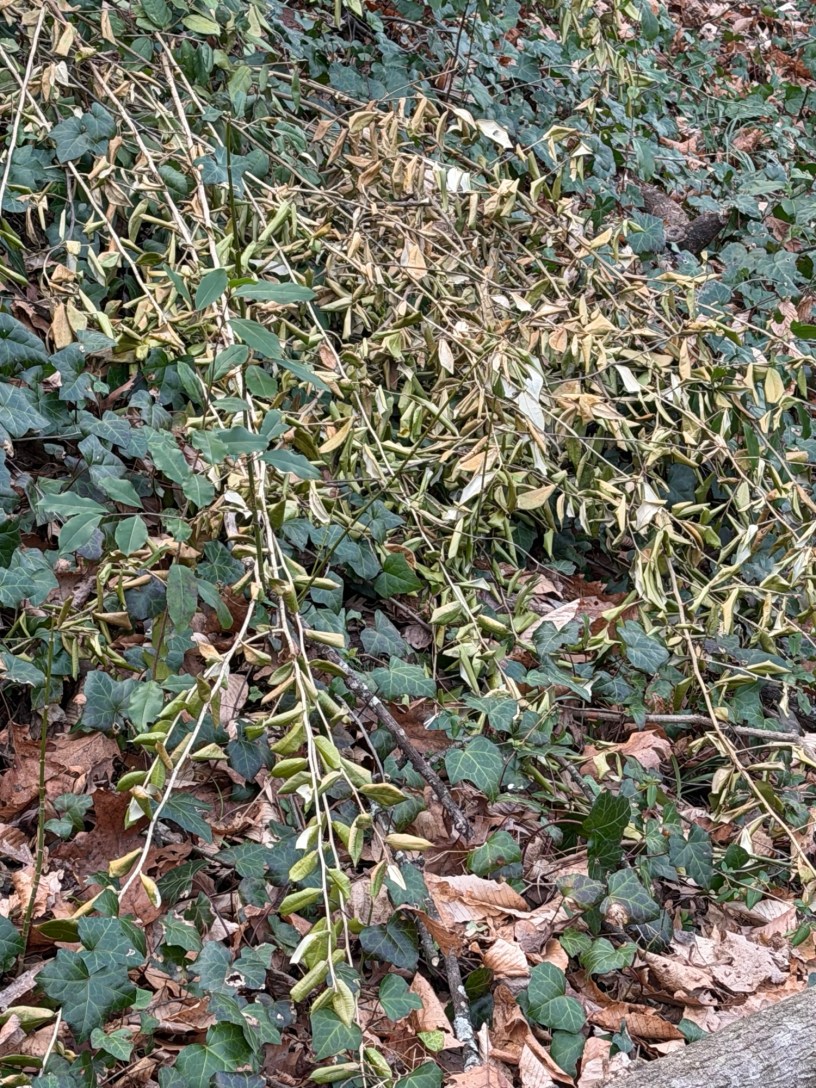
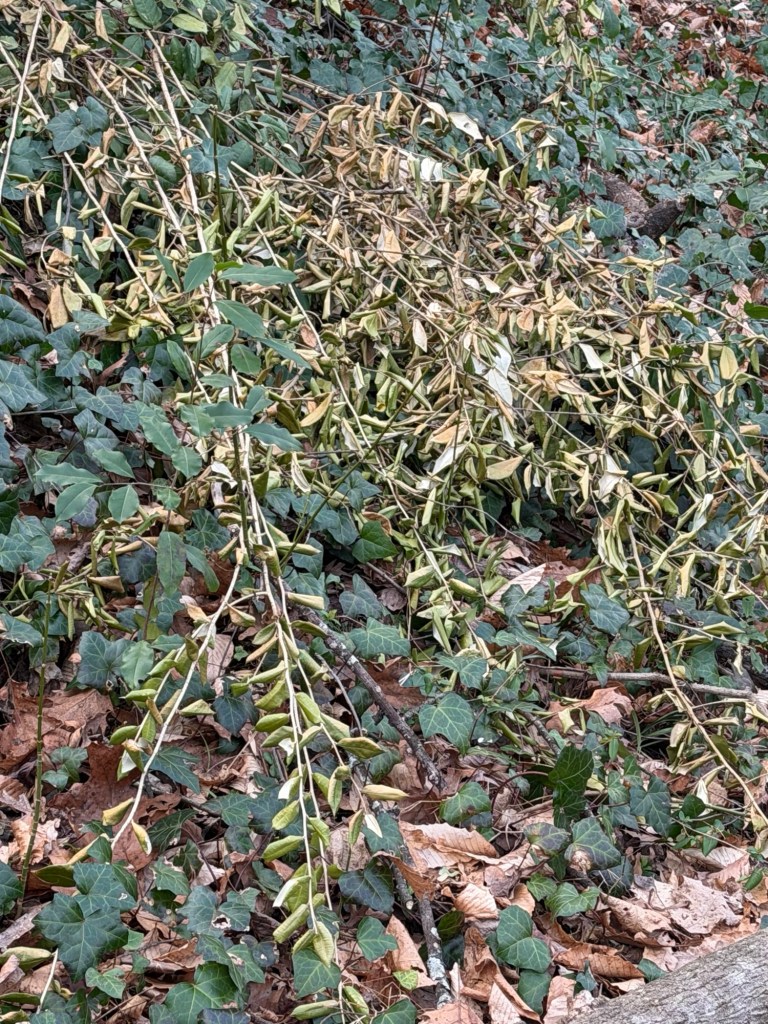
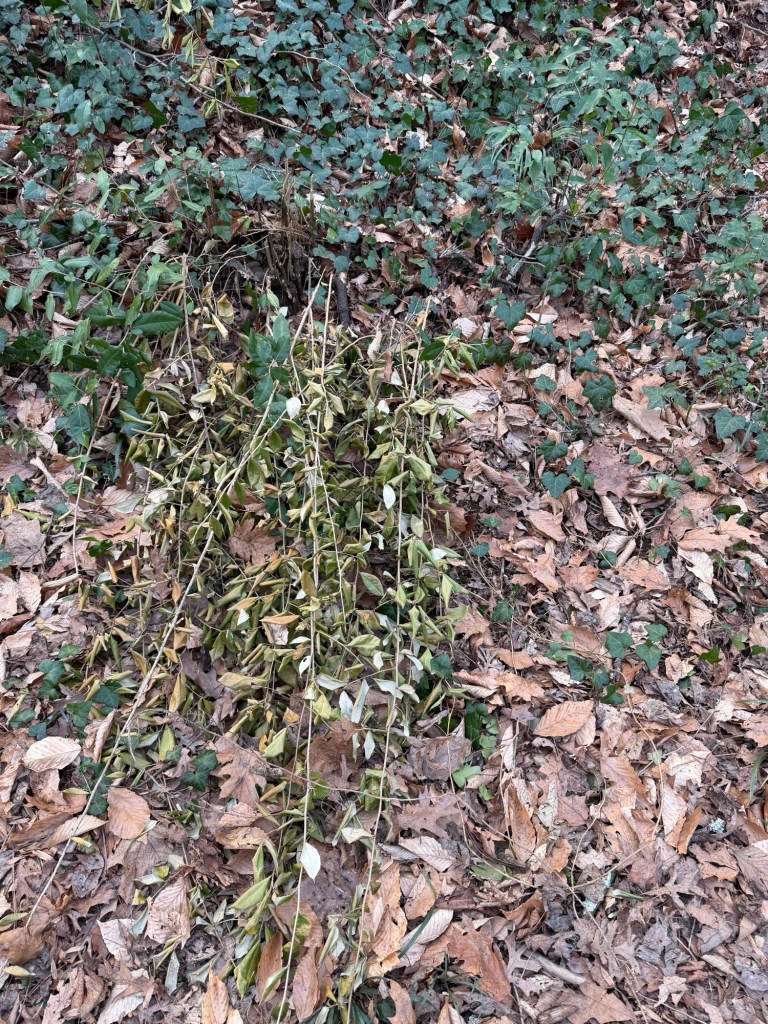
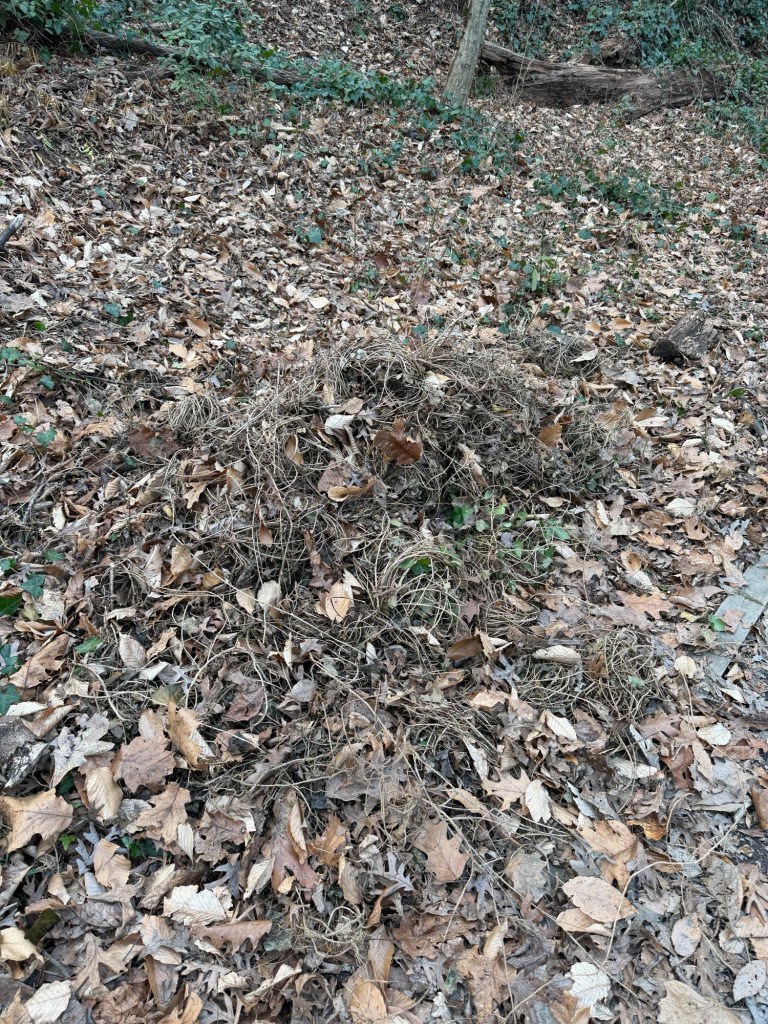
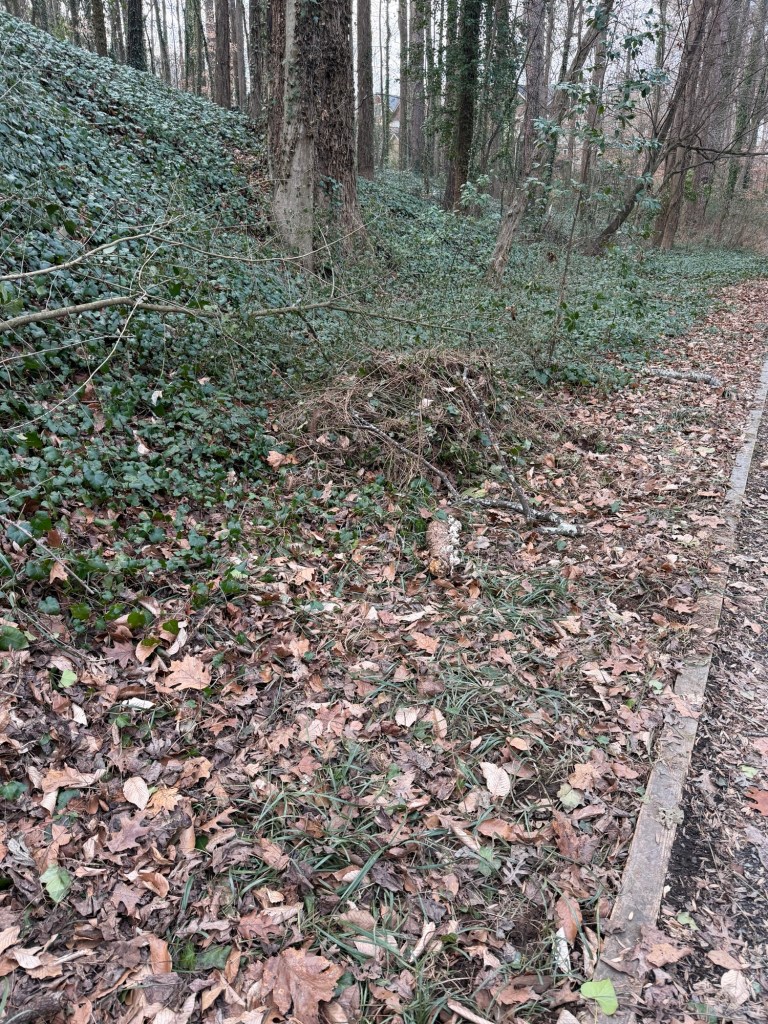
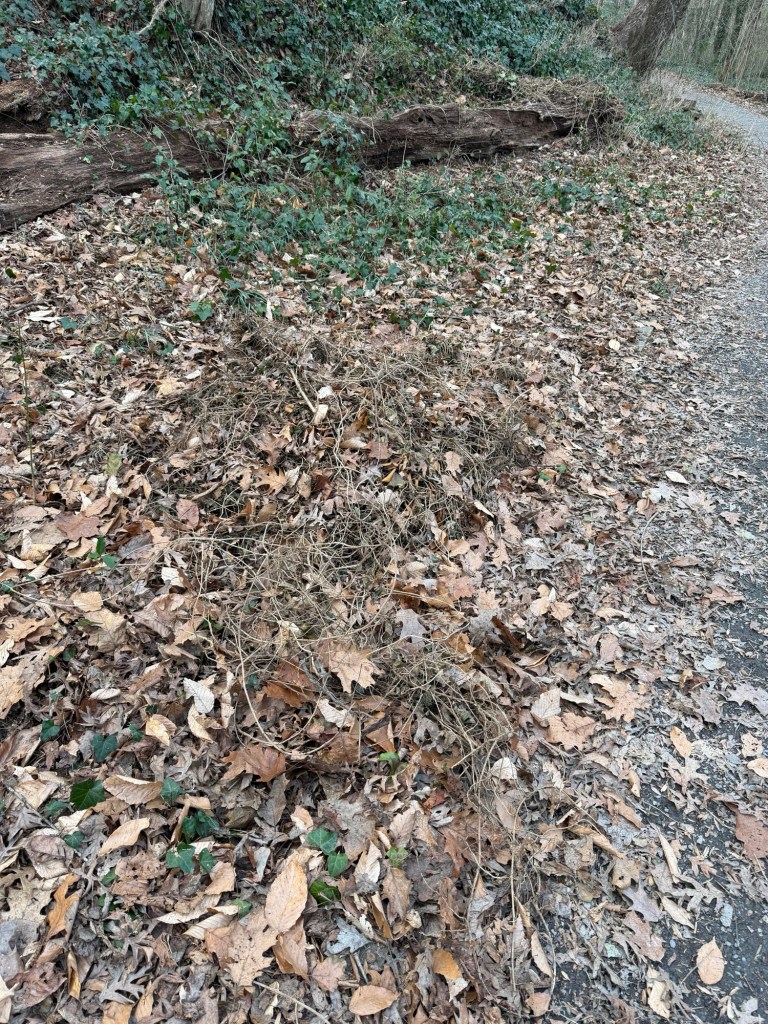
In several areas, invasive vines and shrubs have been cut back or pulled, which is great. That first step matters. But instead of being removed from the site, the cut material is often left right where it fell. Piled up. Sometimes neatly, sometimes not. Always still very much present.
At first glance, this can look harmless. The plants are cut, after all. Job done, right?
Unfortunately, with invasives, that’s rarely how it works.
Many of the most aggressive invasive plants in our area don’t need roots, soil, or much encouragement at all to keep spreading. English ivy, privet, vinca, and similar species can re-root from cut vines, nodes, or even small fragments left in contact with the ground. When cut material is left on the forest floor, especially in shaded or moist areas, it often survives long enough to reestablish itself. In some cases, it spreads even farther than before.
There’s also the issue of scale. Demonstration piles may seem contained, but over time they flatten, spread, and blend back into the landscape. What started as “removed” becomes “redistributed.” The visual signal to others is also confusing. It looks like the work is finished, when in reality the problem has just been paused.
Another concern is impact on the understory. Piles of cut invasive plants smother native seedlings, block light, and create exactly the kind of disturbed conditions invasives love. Native plants lose twice: first to the invasive growth, and then to the aftermath of partial removal.
So when we ask what best practice looks like, here’s what it generally includes:
• Removing invasive plant material fully from sensitive areas
• Drying it thoroughly off the ground where re-rooting isn’t possible
• Bagging or hauling it out when feasible
• Or staging it in a way that prevents regrowth and spread
None of this is about blame. Invasive removal is hard work, and we’re grateful for anyone willing to take it on. But how we finish the job matters just as much as starting it.
The goal isn’t just to cut invasives. The goal is to reduce their ability to come back.
So we’re asking, genuinely and publicly, because it’s an important conversation for the health of the park:
If we’re already putting in the effort to remove invasive plants, shouldn’t we make sure they’re actually gone?
Sometimes the difference between progress and a loop is what happens after the cutting stops.
https://dearbornpark.org/2025/12/13/please-dont-leave-pumpkins-or-food-waste-in-dearborn-park/
https://dearbornpark.org/2025/10/30/%f0%9f%8c%bf-mulch-mow-dont-blow-%f0%9f%8d%82/
 Friends of Dearborn Park